Legislature passes balanced FY15 budget

Focuses on Reforms and Enhancing Support for Commonwealth’s Most Vulnerable Citizens

Rep. Roy joined his colleagues in the Legislatures to pass a $36.5 billion state budget for Fiscal Year 2015 (FY15) focused on economic growth and increased government accountability and oversight.

The spending plan makes important investments in local aid, education, and human services including substance abuse treatment and prevention and mental health care. Building on a responsible yet proactive approach to combatting the recession, the Legislature’s budget contains multiple measures to achieve sustainable economic growth and provide essential services that support the Commonwealth’s citizens.

“This budget reflects and extends the fiscally-prudent, targeted and inventive initiatives that have led to Massachusetts’ recent economic growth,” said House Speaker Robert A. DeLeo (D – Winthrop). “The Legislature continues to invest in key areas like education and local aid that strengthen towns and businesses and benefit residents. We propose strong measures to care for the state’s most vulnerable residents, including increased resources for DCF and funding to improve mental health and substance abuse programs. I thank Senate President Murray, the conferees and my colleagues in the Legislature for their thoughtful work.”

“This budget addresses a number of concerns that have arisen in Massachusetts over the past year,” said Rep. Roy. “At the same time, we have been successful in providing some increases in local aid, education, and public safety matters. It was also great to see that some of the local needs in Franklin and Medway were part of the final budget.”

The FY15 budget includes two amendments filed by Rep. Roy which sought $60,000 for the installation and operation of solar powered school zone safety lights in Franklin and $22,000 in funding for a hydraulic analysis of the dam in Choate Park in Medway.

This budget enhances the Commonwealth’s partnerships with cities and towns through numerous funding streams including $945.8 million to Unrestricted General Government Aid (UGGA), a $25.5 million increase from FY14 and $4.4 billion for Chapter 70, a record funding level. The spending plan provides $257.5 million for the Special Education Circuit Break, ensuring full funding for the third consecutive year and $70.3 million for Regional School Transportation to reimburse municipalities at 90 percent, marking the highest rate in the program’s history.

In addition to educational investments through local aid, this year’s budget extends Massachusetts ongoing commitment to strengthening its educational systems to foster equality and provide residents with a competitive edge. The budget allocates $15 million to expand access to early education and funds a grant program at $9.1 million to support Early Head Start and Head Start programs. The budget also prioritizes higher education through investments in state universities, community colleges and the University of Massachusetts and includes $519 million for UMass which will enable a freeze in tuition and fees for the second year. In addition, the budget dedicates money to implement the STEM Starter Academy, an initiative created in the FY14 budget aimed at strengthening and expanding STEM programming in community colleges.

This year’s budget emphasizes the importance of enhanced fiscal predictability and sustainable investments, a practice that has raised Massachusetts bond rating to AA+, the highest in the state’s history. In an extension of this fiscal prudence, the spending plan makes the lowest draw from the Stabilization Fund in four years and contributes about $1.79 billion to Massachusetts’ unfunded pension liability to accelerate the timetable for full funding. Additional economic development measures include:

  •  Codifies the Massachusetts Science, Technology, Engineering and Math Advisory Council;
  • Travel and tourism is one of the state’s largest industries, generating almost $17 billion in travel related expenditures and supporting 124,700 in-state jobs. The budget allocates $18 million for the Massachusetts Office of Travel and Tourism and$7.5 million in regional tourism funding to promote statewide initiatives and increased international travel;
  • Supports the Massachusetts Cultural Council with $12 million in funding;
  • Provides $18.8 million for local libraries, representing an increase of $2.4 million from the previous fiscal year;
  • Establishes a process for all in-state and out-of-state direct shippers to receive a direct wine shipper’s license from the Alcoholic Beverages Control Commission (ABCC) and allows for the collection of state taxes; and,
  • Provides $2 million for the Massachusetts Manufacturing Extension Partnership that will benefit programs designed to assist small and mid-sized manufacturers.

To heighten accountability and streamline operations, the budget establishes the Massachusetts Office of Information Technology (MOIT) to be administered by a Chief Information Officer (CIO) for the Commonwealth. The CIO will be responsible for supervising all IT services of state agencies and will review any proposed IT expenditure costing more than $200,000. The Massachusetts Health Connector Authority will be considered a state agency for the purposes of MOIT oversight.

This budget reflects the Legislature’s pledge to combat the alarming rise in mental health problems and substance addiction. It allocates almost $18 million in new spending to help combat substance addiction including $10 million for the Substance Abuse Services Trust Fund to provide substance abuse services to an additional 10,000 individuals in need of treatment. The spending plan also includes the following investments in substance abuse services and treatment:

  • Creates a multi-year grant program at $5 million to fund mental health and substance abuse counselors within schools;
  • Increases funding for specialty courts, including drug courts, to $3 million;
  • Places addiction specialists in the Brockton, Plymouth and Quincy courts;
  • Funds training and purchase of Nasal Narcan™;
  • Creates a voluntary accreditation program for sober homes; and,
  • Provides additional funding for the Prescription Monitoring Program to prevent the over-prescription of medications.

To improve quality of care for people suffering from mental illness, the budget provides $10 million for the expansion of community-based placements for at least 100 discharge-ready patients in the Department of Mental Health system, while maintaining sheltered workshops for those individuals who wish to remain in a residential setting. It also creates a Behavioral and Mental Health Special task Force to identify impediments to the delivery of comprehensive treatment.

The budget includes numerous additional health and human services provisions including $60 million in MassHealth investments and:

  • $47.5 million for nursing homes to reduce the gap between Medicaid payments and uncompensated care;
  • $35 million for Disproportionate Share Hospitals;
  • $3 million in funds for employments programs for clients of the Department of Developmental Services;
  • Requires the implementation of a hearing process for long-term facilities before there is any intent to close;
  • Creates a legislative and executive working group to examine and make recommendations concerning Bridgewater State Hospital; and,
  • Maintains 45 beds at Taunton State Hospital and funds the opening of two additional wings at Worcester Recovery Center and Hospital.

Building on the continued leadership in reforming and strengthening the Department of Children and Families (DCF), the budget provides $185.6 million to reduce social worker caseloads. It also includes initiatives to improve communications, IT and record keeping practices, and ensure initial medical screenings of all children entering DCF care within 72 hours. Background checks will now be required for all current and future foster parents. Individuals will be precluded from becoming foster parents if convicted of serious crimes, including those involving violence or sexual in nature.

The budget also:

  • Provides $65 million for the Massachusetts Rental Voucher Program and permits for unexpended FY14 funds to carry forward, allowing hundreds of new families to access safe and permanent housing;
  • Expands the Veterans Motor Vehicle Excise Exemption to include leased cars;
  • Places a moratorium on the issuance of a Chapter 91 tidelands license permitting the development of rail lines or rail facilities for the transportation of ethanol to storage or blending facilities in the cities of Cambridge, Chelsea, Revere, Everett, Somerville and East Boston until January 1, 2017;
  • Establishes a permanent commission on the future of metropolitan area beaches;
  • Establishes a memorial to honor Massachusetts Iraq and Afghanistan Fallen Heroes; and,
  • Reestablishes the Water Supply Protection Program to promote the safety and purity of the Commonwealth’s water supplies and the protection of watershed lands.

To get more detail and review the actual budget, click here.

Posted in Uncategorized | Comments Off on Legislature passes balanced FY15 budget

Commissioner speaks with us about education

A few weeks ago, Rep. Roy and Sen. Spilka sat down with Commissioner Mitchell Chester and interviewer Frank Falvey to talk about the state of Massachusetts education. The conversation included a discussion of the Commissioner’s duties and responsibilities, the Common Core curriculum, and PARCC testing. Here is the Frank Presents video:

Posted in Uncategorized | Comments Off on Commissioner speaks with us about education

May office hours announced

State Representative Jeffrey Roy (D-Franklin) announced today that constituent office hours will be held in Medway & Franklin for the Month of May on the following days:

Medway – Saturday May 24th, 10:00-11:00AM, Medway Public Library, Cole Room A – 26 High Street, Medway, MA 02053

Franklin – Thursday May 29th, 4:00-5:00PM, Spruce Pond Creamery – 370 King Street, Franklin, MA 02038

Christopher Yancich, his legislative aide, will be accompanying him.

Representative Roy stated that all office hours are open to any residents of Franklin and Medway who may have questions or concerns that they wish to bring to his attention. Walk-ins are welcome; no appointment necessary. He looks forward to hearing from you.

He also invites all constituents to call him at his State House office at (617) 722-2400, stop by Room 134 in the State House, or email him at Jeffrey.Roy@MAhouse.gov.

Posted in Uncategorized | Comments Off on May office hours announced

Questions arise on Common Core and PARCC

Rep. Roy meeting with Education Commissioner Mitchell Chester, Curriculum Direct Susan Whettle, and Rep. Jonathan Hecht.

Rep. Roy meeting with Education Commissioner Mitchell Chester, Curriculum Director Susan Whettle, and Rep. Jonathan Hecht.

Several parents have reached out to our office to inquire about the implementation of the Common Core and PARCC testing in Massachusetts. In 2010, the Massachusetts Board of Elementary and Secondary Education (DESE) voted to adopt the Common Core State Standards (CCSS) to replace the English Language Arts and Mathematics Curriculum Frameworks. Committees of educators, working with DESE, augmented and customized the Common Core in a process that led to the development of the Massachusetts Curriculum Frameworks that were approved by the Board of Elementary and Secondary Education at their December 21, 2010 meeting.

The new frameworks were followed by a proposed new assessment tool known as thePartnership for Assessment of Readiness for College and Careers (PARCC) to replace the Massachusetts Comprehensive Assessment System (MCAS)PARCC is a set of assessments that measure whether students are on track to be successful in college and their careers. These high quality, computer-based K–12 assessments in Mathematics and English Language Arts/Literacy give teachers, schools, students, and parents better information on whether students are on track in their learning and for success after high school, and tools to help teachers customize learning to meet student needs. Massachusetts has just begun a two-year trial period for PARCC assessments and will determine in 2016 whether to continue after receiving feedback from educators, policymakers, parents, and students.

The goal of the curriculum frameworks and PARCC field testing is to strengthen the education system in Massachusetts and help our kids be college and career ready.

The Nation at Risk report from 1983 provided the backdrop for education reform efforts throughout the nation. Following that report and a lawsuit challenging the adequacy of education in the Commonwealth, standards-based reforms were introduced in 1993 with passage of the Education Reform Act. This law called for high standards for achievement, accountability for performance, and equitable funding for meeting these goals and set forth a Common Core for Learning program. The 2010 revisions were part of DESE’s efforts at continued improvement of our educational offerings and further reforms.

The latest round of reforms has raised questions about whether Massachusetts was taking steps backward, and whether the federal government was encroaching on local authority.

To address these concerns, Rep. Roy has met with representatives from DESE and the School Superintendents in the area. In addition, he has participated in a number of meetings on the subject. Rep. Roy is a former School Committee member and a current member of the Joint Committee on Education. The Education Committee has conducted a number of hearings on this topic and received many briefing materials. The DESE website has a page dedicated to PARCC which includes many of these materials and which you can view by clicking here. The site also contains answers to frequently asked questions that address many of these concerns.

Earlier in the week, a new report was issued entitled The New Opportunity to Lead, a vision for education in Massachusetts in the next 20 years. The report outlines some of the things we need to do in Massachusetts to make our already good school system great. The Common Core and PARCC fit in rather well with this vision.

In addition, the Condition of Education in the Commonwealth report for 2013 addresses continuing challenges — ranging from a lack of school readiness to a lingering proficiency gap to the need to ensure all students are college and career ready.

Rep. Roy has committed himself to becoming well-versed on the topic and has attended a number of programs and seminars on both Common Core and PARCC. He is looking to bring some experts to the district to engage with residents.

Massachusetts has a centuries old-commitment to excellence in public education and we look forward to insuring that our students get a top notch education.

Posted in Uncategorized | 2 Comments

License plate bill to be heard this month

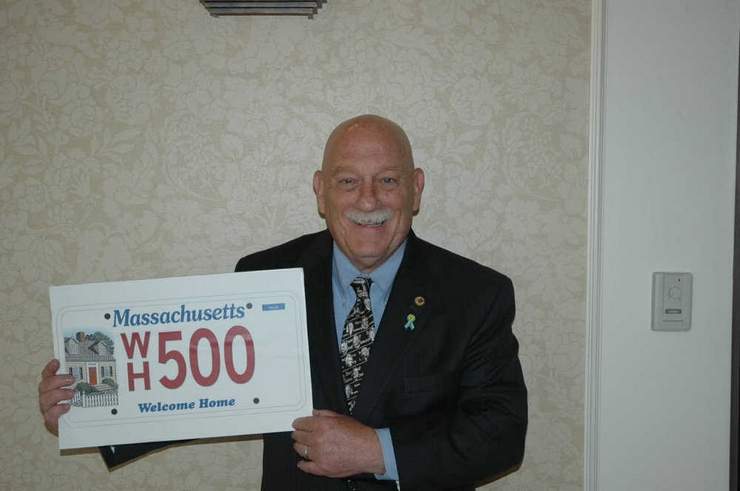
Yorkis plateOur license plate bill will be heard by the Joint Committee on Transportation on February 12, 2014 at 10:00 am. House Bill 3136 would reduce the number of initial applicants required to purchase specialty plates in advance, and those additional ones during the first two years from 1,500 to 500. So, instead of 3,000 applicants, 1,000 would be sufficient.

By lowering the initial threshold for specialty plates, we can help charitable groups who are finding it difficult to raise money and keep their programs going. The current system creates substantial obstacles for smaller nonprofit groups that wish to benefit from the issue of the special plate series.  By lowering the number of license plate applications needed in order to obtain approval from the Registry of Motor Vehicles, all charitable foundations will have a better opportunity to be successful in getting their plates into production. As a result, there will be an increased the long-term revenue stream that these small charities need. And it has bipartisan support in the House.

Rep. Roy has been researching plate legislation throughout the United States and has even toured the plate manufacturing facility at MCI Cedar Junction in Walpole. These efforts are to make certain that the bill is revenue neutral and will not increase costs to the Commonwealth. He has worked closely with Paul Yorkis of Medway in the preparation and presentation of this legislation. Yorkis has been instrumental in working with the MA Association of Realtors Welcome Home Fund which has sold over 500 plates, but are far below the current threshold.

Most states embrace the special license plate and have much lower thresholds. As a result, hundreds of charitable entities have been able to increase funds available to fulfill their missions. States like Iowa, Michigan, New Jersey and Ohio impose minimums of no more than 500 plates. Missouri requires only 200, and Georgia will manufacture a plate for as few as one applicant. The State of Indiana has the most lenient requirements, and through a process of on the spot printing, can produce 2D printed (no raised letters) license plates for as many or as few drivers as they want. And in Indiana, over 100 special plates are offered to its citizens on behalf of charitable organizations.

You can view the full text of the legislation by clicking here. You can view the legislative fact sheet prepared by Rep. Roy’s office by clicking here.

Last May, the bill  was featured in a Worcester Telegram & Gazette story. To view that story, click here.

Posted in Uncategorized | 1 Comment

Manufacturing roundtable slated for January at Tri-County

On Friday, January 24, 2014 at 9 am, Rep. Roy and Rep. John Fernandes are hosting a Manufacturing Roundtable at the Tri-County Regional Vocational Technical High School in Franklin, Massachusetts. Legislators from all 11 towns in the Tri-County area will also participate in the meeting.

Two hundred eighty nine manufacturers, representing employers in the 11 towns making up the Tr-iCounty school district, have been invited to participate in the discussion. They will meet to help address the skilled labor shortage that manufacturers in our area face. Tri-County is considering some options, but we are looking to the business community to help come up with workable solutions.

Manufacturing is vitally important to the Massachusetts economy. It is the sixth largest employment sector here, and is helping to lead us out of the recession. In Massachusetts, manufacturing contributes to more than 10 percent of gross state product (GSP). Currently there are 7,680 manufacturing establishments in Massachusetts that employ more than 275,000 residents. Over the next five years, manufacturing establishments are expected to expand their employment by an estimated 65 percent. In order to sustain this growth, we need to help by developing a strong nexus between educational and training opportunities and the specialized worker skills required by these companies to ultimately succeed.

The Tri-County meeting will be a forum to discuss partnering with manufacturing leaders to ensure that their companies have the tools and highly trained workforce they need to grow. The manufacturing of today involves expertise and training in technology, programming and streamlined production and we need to prepare and train people to work in this vital sector. What were once dark, gritty factories, are now high-tech, innovative facilities that provide good paying jobs to skilled and educated employees.

In order to facilitate the discussion, we have invited Eric Nakajima, the Assistant Secretary for Innovation Policy for the Executive Office of Housing & Economic Development, Bob Vozzella, the manufacturing manager at TE Connectivity and an instructor of manufacturing at Wentworth Institute, Steven Dockrey, Tri-County’s Superintendent, and representatives from MassDevelopment and the 495/MetroWest Partnership, to highlight ways in which we can come together to prepare a new generation of workers in this vital sector. Our efforts are supported by the Legislature’s recently-formed, bipartisan Manufacturing Caucus which serves as a link for legislators cutting across issues that affect the manufacturing industry. The Caucus is co-chaired by Rep. Fernandes and Sen. Richard Moore.

Those interested in participating are asked to by register by clicking here. They can also register by calling Christopher Yancich at 617-720-2400. We would like to get a final headcount by January 17th, 2014, so please RSVP before that day. An agenda and program materials will be forwarded to you prior to the meeting.

Posted in Uncategorized | Comments Off on Manufacturing roundtable slated for January at Tri-County

Franklin seniors tour State House

Representative Jeffrey Roy (D. Franklin) was honored to host a group from the Franklin Senior Center in the State House. The seniors took a tour of the People’s House and were joined by Senators Karen Spilka (Ashland – D) and Richard Ross (Wrentham – R) for an inside tour of the State Senate Chamber and Reading Room. The tour also featured a visit with House Clerk Steven James who provided insight on the history of the House Chamber.

Seniors_roy11-20-13

“It was a fun and engaging visit with a great group from Franklin,” said Representative Roy (Franklin-D), “Many of them were visiting the State House for the first time and were engaging with the State House employees they met along the way.”

The timing of the visit and tour coincided with events surrounding the anniversary of President Kennedy’s Assassination. The seniors had an opportunity to reflect and share their thoughts with WBZ-TV’s Paula Ebben on the events of 50 years ago and the aftermath of President Kennedy’s assassination.

“It was wonderful to welcome such a terrific group to the State House,” Senator Karen Spilka (D-Ashland) said. “Learning about the political process and getting involved in government is very important at any age. I’m so glad we were able to offer this opportunity for seniors in our community to visit and learn how to continue to be active and engaged citizens.”

“It’s always a great opportunity to show constituents around the historic Massachusetts State House, with the Commonwealth having played such a critical role in our nation’s history. It was my pleasure to aid in taking Franklin Seniors on a tour and I hope I was able to add to their learning experience. ” said Senator Ross.

You can view more pictures from the visit by clicking here.

Posted in Uncategorized | Comments Off on Franklin seniors tour State House

Rep. Roy highlights importance of local manufacturing

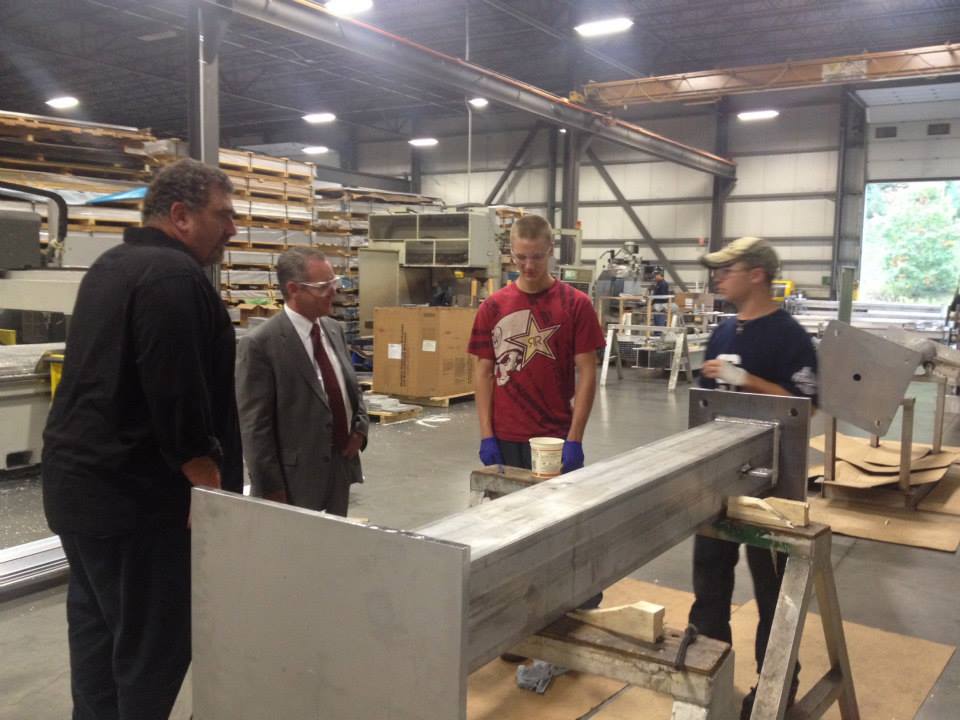
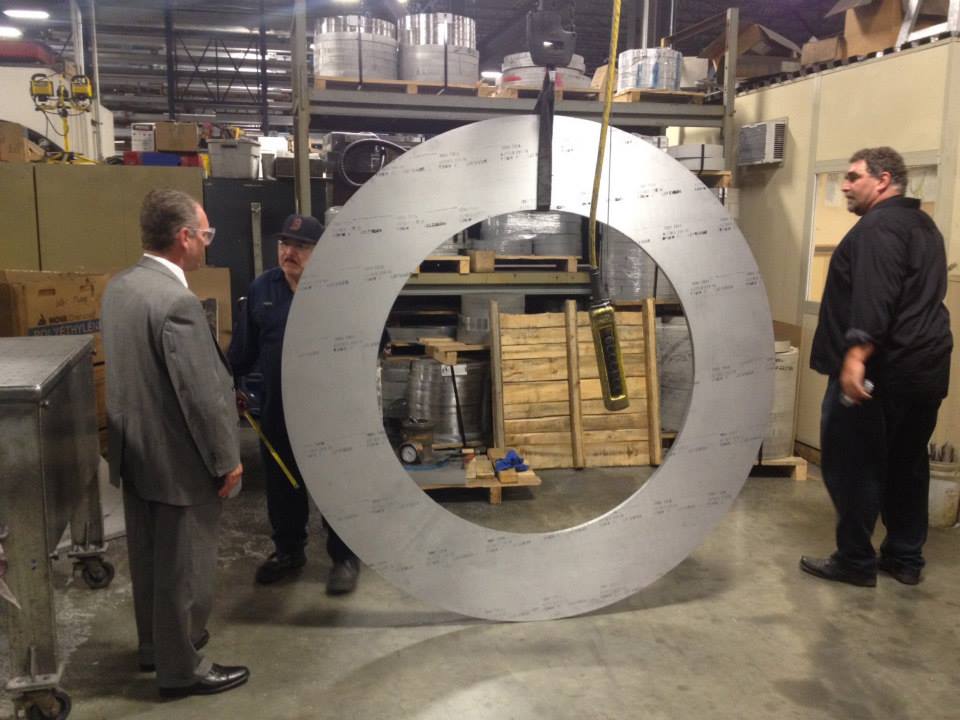
Roy Pierce Aluminum1Rep. Jeffrey Roy (D- Franklin) visited Pierce Aluminum’s manufacturing, distribution and national headquarters in Franklin to commemorate Manufacturing Day. Manufacturers from across the country opened their doors on Friday to demonstrate the potential of modern manufacturing, while fostering an interest in manufacturing careers.

“Manufacturing is the sixth largest employment sector in Massachusetts, and is helping to lead us out of the recession,” noted Rep. Roy after the visit. “My visit with Pierce today, and the many other manufacturers in the area over the past several months, is part of an effort to support and recognize our manufacturers as leaders in advancing the Commonwealth’s economy. The manufacturing of today involves a lot more expertise and training in technology, programming and streamlined production. We need to prepare and train people to work in this vital sector.”

“I am proud to say that the Legislature has made thoughtful investments in the state’s manufacturing industry,” said House Speaker Robert A. DeLeo, D-Winthrop. “Whether through the gaming law or the 2012 economic development legislation, Massachusetts is increasingly becoming the place for manufacturing jobs. Manufacturing Day is a call to action for legislators, business leaders and employers. I urge you to pursue new ways to incorporate these jobs – for employees of all skill levels – into existing and emerging industries. I believe this is essential in furthering our state’s development and will help make Massachusetts a better place to live, work and do business.”

Roy Pierce Aluminum4“Manufacturing is vitally important to the Massachusetts economy,” stated Senate President Pro Tempore Richard T. Moore, D-Uxbridge, Senate Chairman of the Legislature’s Manufacturing Caucus. “What were once dark, gritty factories, are now high-tech, innovative facilities that provide good paying jobs to skilled and educated employees. Partnering with manufacturing leaders to ensure that their companies have the tools and highly trained workforce they need to grow is an essential component of our strategy for economic growth.”

“In light of very positive competitiveness trends in both domestic and global markets, Massachusetts manufacturers are experiencing a welcomed and sustained resurgence of business activity that is favorable to our entire state’s ongoing recovery,” said Rep. John V. Fernandes, D-Milford, House Chairman of the Legislature’s Manufacturing Caucus. “These large and small-sized manufacturing companies often provide meaningful jobs for thousands of new and retrained workers, offer middle-class level wages, and energize regional suppliers and ancillary businesses for long-term growth. We must do what we can to facilitate that growth and develop a strong nexus between educational and training opportunities and the specialized worker skills required by these companies to ultimately succeed.”

Manufacturing Day is a national event designed to addresses common misperceptions about manufacturing by giving manufacturers an opportunity to showcase their efforts in a coordinated fashion. The goal of Manufacturing Day is to begin addressing the national skilled labor shortage that manufacturers face, connect with future generations, take charge of the public image of manufacturing, and ensure the ongoing prosperity of the whole industry.

In Massachusetts, manufacturing contributes to more than 10 percent of gross state product (GSP). Currently there are 7,680 manufacturing establishments in Massachusetts that employ more than 275,000 residents. Over the next five years, manufacturing establishments are expected to expand their employment by an estimated 65 percent.

State Senators and Representatives are supported by the Legislature’s recently-formed, bi-partisan Manufacturing Caucus which serves as a link for legislators cutting across issues that affect the manufacturing industry. Rep. Roy is a member of that caucus.

Posted in Uncategorized | Comments Off on Rep. Roy highlights importance of local manufacturing

Labor Day visit with manufacturing industry

IMGP0828We kicked off the Labor Day weekend with a visit at MicroGroup in Medway. MicroGroup is a major supplier of small-diameter tubing and solid stock, as well as a world-leading manufacturer of miniature metal components. For over 40 years MicroGroup has focused on using speed and precision to rapidly deliver the highest quality industrial and medical device components and assemblies to its customers. We are delighted to have them in the 10th Norfolk District. You can learn more at http://www.microgroup.com/.

We posted an album with photographs from our tour on Facebook which you can view by clicking here. The photos give a brief glimpse of the company, its operations, and its products. The employees at the company had a passion for their work. During the tour, it was noted that the employees are inspired by the fact that their work is saving lives, and that the medical devices they are making could be in their mother, father, sister or brother.

It was fitting to begin the weekend in a manufacturing establishment. After decades of losing factory and assembly line jobs, manufacturing is poised for a promising future in Massachusetts, thanks to companies like MicroGroup and corporate investments in cutting-edge technologies and skilled workers who are churning out high-end products faster and cheaper than ever here. Manufacturing in Massachusetts has survived the Great Recession and, if anything, appears to be in a better position to prosper in the future according to the authors of a report entitled “Staying Power II: A Report Card on Manufacturing in Massachusetts 2012.”

As we appreciate one company and the manufacturing industry in general, we recognize that Labor Day is a celebration of the American labor movement and is dedicated to the social and economic achievements of workers. It constitutes a national tribute to the contributions workers have made to the strength, prosperity, and well-being of their country. Labor Day became an officially sanctioned federal holiday in the aftermath of some of the most turbulent labor unrest in the history of the United States that had crippled the country’s railways.  The bill creating the Labor Day holiday was rushed unanimously through Congress near the end of summer in 1894 following the deaths of a number of workers during the Pullman Strike.

Posted in Uncategorized | Comments Off on Labor Day visit with manufacturing industry

Much needed civics lessons

When more than two-thirds of Americans cannot even name the three branches of government, this is something to worry about. Indeed, it poses a risk to constitutional government. 

This was the topic of a recent discussion at Boston College Law School headlined by retired Supreme Court Justice Sandra Day O’Connor. You can view an article on the discussion by clicking here.

Along these lines, Justice O’Connor, in cooperation with Georgetown University Law Center and has developed a Web site and interactive civics curriculum for 7th, 8th and 9th grade students called Our Courts. You can view that site by clicking here. At the ABA conference, Meryl J. Chertoff, Professor at Georgetown University Law School and Director of the Sandra Day O’Connor Project on the State of the Judiciary reported on new online learning tool. You can view that video by clicking here.

As part of my personal commitment to this effort, I have been hosting Franklin and Medway residents at the State House to provide an in depth look at what we do in the building. Residents from ages 8 to 80 have stopped by for tours and discussions with State House employees about how our government works. In addition, I have participated in the Constitution in the Classroom project at Franklin High School. Constitution in the Classroom is an effort by the American Constitution Society to bring its members into primary and secondary classrooms to raise awareness of fundamental constitutional principles.

As Thomas Jefferson once observed: “An enlightened citizenry is indispensable for the proper functioning of a republic. Self-government is not possible unless the citizens are educated sufficiently to enable them to exercise oversight. It is therefore imperative that the nation see to it that a suitable education be provided for all its citizens.” Those words are critical underpinnings to the need for greater civics instruction.

I urge you to join me in promoting civics education. If you are interested in participating in a State House tour, please contact our office by clicking here.

Posted in Uncategorized | Comments Off on Much needed civics lessons